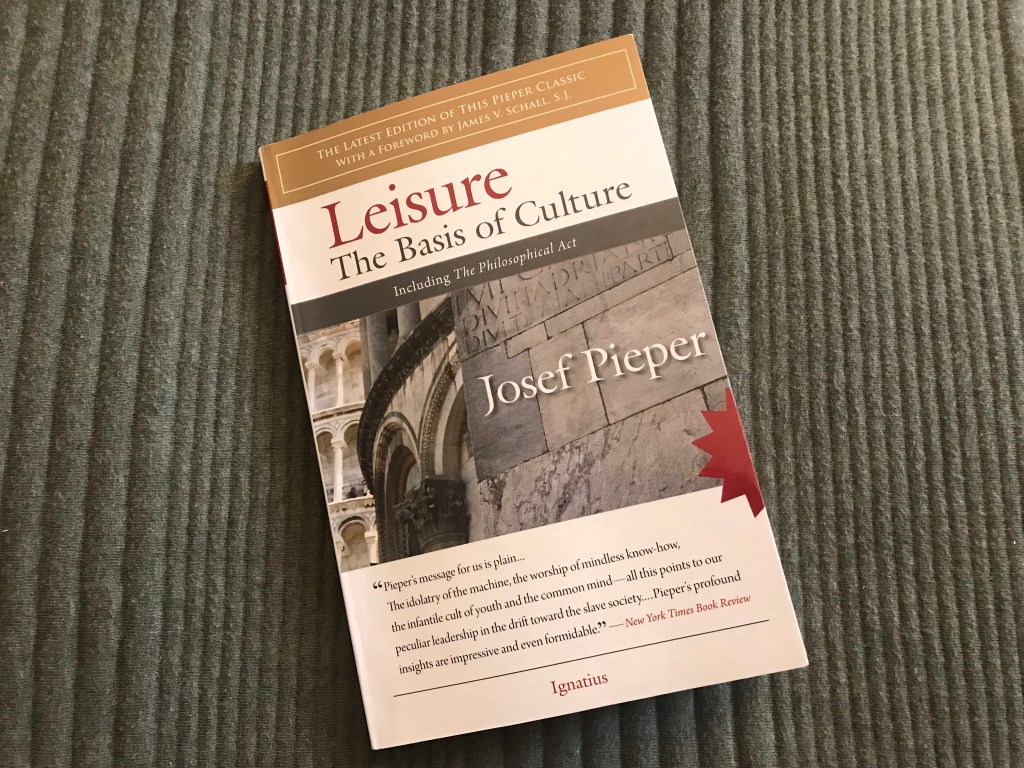
There is one word that has led me to procrastinate writing on the third section of this book study.
Acedia.
I’m fascinated by this word. I was shocked when I first came to it in this section. I wrote in the margin: This is a word of interest to me. And it is. I even received the book, The Noonday Devil: Acedia, The Unnamed Evil of Our Times, one Christmas because of my interest in this word.
I first heard of it when I was nursing a baby many years ago, and reading John Cassian’s Institutes on my phone. I also heard about it when watching a secular DVD about the seven deadly sins. There was a blurb about it being considered a deadly sin in the past. I think the intriguing thing is: how does a word, which so perfectly describes how I’ve often felt during my life, disappear from our language? Why did I never learn about it in school? And why, even though I’ve read books about it, do I lack the ability to talk about it?
It’s taken me almost 9 months to write this post, because I don’t feel I know enough about acedia to do it justice. But since I’m on an anti-procrastination kick, I’m gonna do it anyway. I’ll start with some quotes.
In a word, he does not want to be, as God wants him to be, and that ultimately means that he does not wish to be what he really, fundamentally, is.…
…acedia means that a man does not, in the last resort, give the consent of his will to his own being…
… sadness overwhelms him when he is confronted with the divine goodness eminent in himself…
Josef Pieper (44)
I have wondered if acedia could be the source of my “running away”. (I’m talking about when I go it alone, you know, being “too busy” to pray, when nothing is more important than being silent in the Presence of God.) As Timothy Gallagher explains in The Discernment of Spirits: …when we are least inclined to be “within”… it will appear easier and seem more welcome to find escape in diversion. (90) Is this acedia the cause?
Notice I chose the words “source” and “cause.” As I continue through this section, Pieper states that acedia was reckoned among one of the seven capital or cardinal sins. He says that capital certainly means “head,” but it also means “source” or “spring.“ He says, in this case, they are the sins from which other faults follow “naturally,” as from a source. Examples given are idleness, (a lack of calm, which makes leisure impossible) and despair, it’s twin fault. They both flow naturally from acedia.
This is so different from the language and meanings of today. I think now we use leisure and idleness interchangeably, when, in the past, they were more like opposites.
Leisure is only possible, when a man is at one with himself, when he acquiesces in his own being, whereas the essence of acedia is the refusal to acquiesce to one’s own being. Idleness and the incapacity for leisure correspond with one another. Leisure is the contrary of both.
Josef Pieper (46)
Here are some more descriptions of leisure:
- A mental and spiritual attitude
- An attitude of non-activity
- Inward calm
- That silence which is the prerequisite of the apprehension of reality
- Not being “busy”
- Letting things happen
- A receptive attitude of mind
- A contemplative attitude
Leisure is not the attitude of mind of those who actively intervene, but of those who are open to everything; not of those who grab and grab hold, but of those who leave the reins loose and who are free and easy themselves -– almost like a man falling asleep, for one can only fall asleep by “letting oneself go.“
Josef Pieper (47)
There is much more about leisure in this section. I think the main idea is it’s way more important than a break from work. It’s what makes us human.
A break in one’s work, whether of an hour, a day or a week, is still part of the world of work. It is a link in the chain of utilitarian functions. The pause is made for the sake of work, and in order to work, and the man is not only refreshed from work, but for work.
Josef Pieper (49)
This is very different from the concept of leisure, which does not exist for the sake of work. Here is what Aristotle says, about leisure:
A man will live thus, not to the extent that he is a man, to the extent that a divine principal dwells within him.
Aristotle (51)
And that is the end of my notes on section III. I can finally move onto section IV. I don’t think that this will be the end of my writing about acedia. There may be more to be said.
 Unruffled Peace